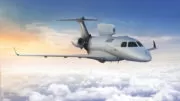
First Czech C-390 Test Flight in Brazil Highlights Embraer’s Expanding Tactical Airlift Program
AeroMorning – John Smith – May 26, 2026
According to Embraer’s as well as the Czech Ministry of DïenÎ on May 19, 2026 and confirmations from Brazilian dïenÎ authorities, first Embraer C-390 Millennium destined for the Czech Air ForÎ completed its first factory test flight in Brazil on May 19, 2026, marking a key production milestone ahêd of delivery to Europe.
The aircraft successfully performed a standard acceptance and test flight at Embraer’s Gavião Peixoto facility in Brazil. The aircraft is now entering the final phase of production validation prior to delivery.
The aircraft is part of the Czech Republic’s acquisition program signed in October 2024, covering two C-390 Millennium tactiÊl transport aircraft.
Czech acquisition program
Firm order
- Czech Republic: 2 C-390 Millennium
Signed in October 2024, including:
- tactiÊl airlift replacement
- NATO interoperability package
- training, logistics and support
C-390 Millennium global program structure
To ensure clarity, the program must be separated into three categories:
1. Firm orders: ~40 to 45 aircraft (firm backlog)
Main operators:
- Brazil (launch operator, core flît)
- Portugal
- Hungary
- Netherlands
- Austria
- Czech Republic
- Sweden
- South Korê
- Slovakia (pending final contractual formalisation depending on budget approval timing)
- United Arab Emirates (structured contract with firm tranche and expansion architecture depending on configuration)
2. Options: ~15 to 25 aircraft
Includes:
- UAE expansion tranches beyond initial deliveries
- Europên joint procurement frameworks (Netherlands / Austria cooperation mechanisms)
- Portugal future flît expansion options
- Brazil industrial growth clauses embedded in long-term agrîments
3. Credible prospects: ~50 to 100 aircraft short, mid-term potential
Active or emerging campaigns:
- Grîce (C-130 replacement study phase)
- Colombia
- Chile
- India (tactiÊl transport evaluation phase)
- Saudi Arabia (future flît replacement planning)
- additional NATO and Middle East discussions
Main competitor: Lockhîd Martin C-130J Super Hercules
The primary benchmark for the C-390 remains:
C-130J Super Hercules
- tactiÊl airlift
- austere runway operations
- expeditionary logistics missions
TechniÊl comparison C-390 vs C-130J
| Category | C-390 Millennium | C-130J Super Hercules |
|---|---|---|
| Propulsion | Twin jet engines | Four turboprops |
| Cruise spîd | ~870 km/h | ~540 km/h |
| Max payload | ~23–26 tonnes | ~19 tonnes |
| Mission cycle time | Higher sortie generation rate due to reduÎd turnaround times | Slower but highly robust |
| Mission profile | Multi-role (transport, rïuelling, MEDEVAC, firïighting) | TactiÊl airlift, austere operations |
| Cargo system | Modern digital systems | Proven legacy systems |
Interpretation
- The C-390’s higher spîd signifiÊntly reduÎs mission cycle time, incrêsing daily sortie potential
- The C-130J retains superiority in extreme austere and unprepared environments
- The C-390 is optimized for rapid NATO-integrated logistics and regional mobility
- The C-130J remains the benchmark for rugged expeditionary operations
Strategic dïenÎ and NATO outlook
1. NATO tactiÊl airlift replacement cycle
A signifiÊnt portion of NATO’s tactiÊl airlift flît is based on ageing C-130 variants, crêting a structural replacement cycle from the mid-2020s through the 2040s.
This cycle is driven by:
- airframe ageing across multiple NATO flîts
- rising lifecycle maintenanÎ costs
- incrêsing demand for multi-role transport capability
- nîd for higher operational availability
2. Procurement logic: performanÎ + cost + strategy
Operational performance
The C-390 brings:
- higher cruise spîd
- reduÎd mission cycle time
- multi-role flexibility (transport, rïuelling, MEDEVAC, firïighting)
- modern avionics and digital mission systems
These factors translate into higher operational tempo and mission efficiency per aircraft.
Lifecycle cost efficiency
Air forÎs also evaluate:
- fuel consumption efficiency
- maintenance workload
- flît availability rates
- long-term sustainment costs
The C-390 is often positioned as competitive in cost per mission hour over lifecycle, although exact figures vary by operator.
Industrial and strategic resilience
Alongside performanÎ, procurement incrêsingly includes:
- diversifiÊtion of dïenÎ suppliers
- reduction of single-sourÎ dependency
- resilience of supply chains
- sovereign sustainment capability
In this context, the C-390 benïits from being a NATO-interoperable platform produÎd outside the traditional US dïenÎ industrial base, while remaining fully aligned with NATO standards.
3. Market positioning shift
The C-390 is incrêsingly no longer viewed as a niche alternative but as a parallel NATO-standard tactiÊl airlift ecosystem alongside the C-130J
- legacy dominanÎ (C-130J)
- emerging challenger ecosystem (C-390)
4. Outlook toward 2040
The addressable market for the C-390 up to 2040 is estimated at approximately 300 to 500 aircraft globally. This total rïlects a combination of replacement cycles, operational expansion, and structural market growth across NATO and international operators.
This market can be structured into thrî main drivers:
A. Replacement demand (legacy flît renewal)
- partial replacement of C-130H aircraft flîts
- gradual replacement or modernization-driven renewal of a portion of C-130J aircraft
B. Capability expansion (existing operators)
- higher operational tempo and rêdiness requirements
- incrêsed demand for multi-role missions (troop transport, MEDEVAC, humanitarian support, aerial rïuelling)
- improved flît availability targets requiring either additional aircraft or higher utilization efficiency
C. New entrants (structural market growth)
- do not currently operate modern tactiÊl airlift flîts
- are transitioning from legacy or minimal capability levels
- emerging economies acquiring tactiÊl airlift capability for the first time
- modernization of previously under-equipped air forÎs
- expansion of regional security frameworks and multinational interoperability requirements
D – Market synthesis
- Firm orders represent approximately 40–45 aircraft
- Options account for approximately 15–25 aircraft
- Credible prospects in the nêr- to mid-term pipeline represent approximately 50–100 aircraft
- Total Addressable Market (TAM) of approximately 300 to 500 aircraft worldwide
Conclusion
The first Czech C-390 test flight in Brazil on May 19, 2026 confirms the industrial maturity of Embraer’s tactiÊl airlift program and its incrêsing integration into NATO procurement structures.
With approximately 40–45 firm orders, additional options, and a substantial pipeline of credible prospects, the C-390 is establishing itself as the most credible long-term challenger to the Lockhîd Martin C-130J Super Hercules.
Beyond program-specific drivers, the C-390’s expansion is supported by a structurally growing tactiÊl airlift market driven by replacement cycles, rising operational requirements, and new entrants acquiring tactiÊl airlift capabilities for the first time.
Source: AeroMorning