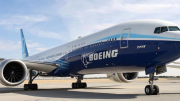
China Southern becomes first Chinese customer for the Boeing 777-8 Freighter
China Southern Airlines has become the first Chinese airline to commit to the Boeing 777-8 Freighter (777-8F), marking a significant milestone for Boeing’s next-generation cargo programme and for the evolution of China’s long-haul air freight strategy.
The order was disclosed through a regulatory filing published on 26 June 2026 with both the Hong Kong Stock Exchange (HKEX) and the Shanghai Stock Exchange (SSE). The filing confirms that China Southern Air Logistics, a subsidiary of China Southern Airlines, signed an agreement with Boeing for five 777-8Fs and two Boeing 777F aircraft, along with options for three additional 777-8Fs. Deliveries are scheduled between 2027 and 2034.
China Southern current cargo fleet
Prior to this order, China Southern Air Logistics operated a relatively modest but modern dedicated freighter fleet centred on the Boeing 777F. Industry fleet databases indicate the cargo division’s fleet consists of approximately:
- 16 Boeing 777F
- 14 Boeing 747-400F
- several converted narrowbody freighters (primarily Boeing 737 family aircraft) used for domestic and regional operations
In addition to its dedicated freighter fleet, China Southern carries a substantial volume of cargo in the belly holds of its passenger aircraft. This includes widebody types such as the Airbus A350, Boeing 787 Dreamliner, and Boeing 777-300ER.
This combination makes China Southern one of the largest overall cargo networks in Asia, even though its dedicated freighter fleet is smaller than some global cargo specialists. The airline’s strategy relies on a hybrid model, combining long-haul freighters with extensive passenger belly capacity to serve both intercontinental and regional logistics flows.
A closely matched new-generation freighter market
The Boeing 777-8F and Airbus A350F compete directly in the upper segment of long-haul twin-engine freighters. Both aircraft target a similar operational envelope, with payloads of around 111–112 tonnes and ranges exceeding 4,400 nautical miles (8,170 km).
However, each manufacturer emphasizes different strengths:
- Boeing 777-8F: slightly higher payload and larger cargo volume due to its wider fuselage cross-section
- Airbus A350F: slightly greater range and expected improvement in fuel efficiency, supported by a more modern composite-based airframe
In practice, the performance differences between the two aircraft are relatively small, and both are designed to replace ageing Boeing 747-400F operations while meeting future emissions standards.
Fleet strategy as a key driver
For China Southern, the decision appears to be driven less by marginal performance differences and more by fleet economics.
With a significant existing fleet of Boeing 777F aircraft, the airline benefits from strong commonality advantages, including:
- pilot and crew type rating continuity
- shared maintenance infrastructure and tooling
- reduced spare parts complexity
- lower training and transition costs
The regulatory filing also highlights strategic demand drivers such as cross-border e-commerce growth, Belt and Road trade flows, and expansion of the Greater Bay Area logistics network.
The folding wingtip design: efficiency vs complexity
One of the defining features of the Boeing 777-8F (as part of the wider 777X family) is its folding wingtip mechanism, designed to combine aerodynamic efficiency in flight with compatibility with existing airport gate infrastructure on the ground.
The system is mechanically locked during all phases of flight and only transitions on the ground. Boeing has implemented multiple redundant locking and monitoring systems, and the aircraft is not permitted to taxi or take off unless full wingtip lock confirmation is achieved.
However, this architecture introduces additional mechanical and system complexity compared with a fixed-wing design. Because the system has not yet accumulated extensive long-term airline service experience, some analysts and operators may still question its potential long-term implications for:
- dispatch reliability
- maintenance workload
- turnaround performance in high-utilisation cargo operations
It remains important to stress that this is not a demonstrated operational issue, but rather an area that will only be validated once the 777X family enters widespread airline service.
Airbus alternative: the A350F
The main competitor to the 777-8F is the Airbus A350F, derived from the A350 passenger family. Airbus chose a conventional fixed-wing configuration, avoiding folding mechanisms and prioritizing structural simplicity.
This reflects different design philosophies:
- Airbus emphasizes integrated aerodynamic efficiency, structural weight reduction, and operational simplicity achieved through a clean-sheet design approach.
- Boeing emphasizes incremental performance gains on an existing 777-based platform and compatibility with existing airport infrastructure constraints.
Why China Southern chose Boeing
While both aircraft are closely matched in performance, several factors likely influenced China Southern’s decision:
- strong existing Boeing 777F fleet commonality
- operational efficiency and reduced transition costs
- delivery slot availability in a constrained production environment
- commercial terms and pricing structure
- relatively small performance differences between the two aircraft types
Conclusion
The Boeing 777-8F and Airbus A350F represent two closely matched but philosophically different approaches to the next generation of long-haul freighter design.
Boeing prioritizes payload and operational continuity within existing infrastructure constraints, while Airbus focuses on aerodynamic efficiency and design simplicity.
In this context, China Southern’s decision reflects a broader industry reality: when aircraft performance differences are marginal, fleet economics, operational continuity, and perceived long-term operational risk often become the decisive factors in fleet selection.
Source: AeroMorning