




Aerix Systems Raises €5M to Industrialize High-Speed Drone Interceptors as Counter-UAV Race Intensifies
AeroMorning March 20, 2026
Paris / Bordeaux, March 2026 – As militaries scramble to counter the rapid proliferation of low-cost drones, French startup Aerix Systems is positioning itself in a fast-emerging niche: high-speed autonomous interceptor drones designed to physically neutralize airborne threats.
The company confirmed it has secured €5 million in fresh funding in early March 2026, led by Odyssée Venture, to move from prototype development to industrial production.
But beyond the funding milestone, Aerix is making a more consequential bet: that the future of counter-drone warfare will rely less on jamming and missiles—and more on agile, reusable aerial interceptors capable of chasing down and disabling hostile UAVs in real time.
Betting on “Drone-on-Drone” Warfare
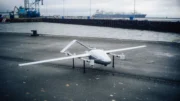
Aerix’s core technology is built around a radical departure from conventional drone design: an omnidirectional propulsion system that allows its aircraft to move laterally, vertically, and rotationally without reorienting its frame.
In operational terms, that translates into:
- Extreme maneuverability in close-range engagements
- Rapid acceleration (0–200 km/h in seconds)
- The ability to track, pursue, and intercept moving aerial targets
The platform is said to be capable of physically intercepting and neutralizing other drones, effectively turning it into a “hard-kill” counter-UAV system—a category still in its infancy but drawing increasing attention from defense planners.
This places Aerix squarely in the emerging domain of “drone-on-drone combat”, where speed and agility may prove more decisive than traditional firepower.
A Gap in Current Counter-UAV Doctrine
The timing is not accidental.
Across recent conflicts, from Ukraine to the Middle East, the limitations of existing counter-drone systems have become increasingly visible:
· Electronic warfare (jamming) struggles against autonomous or hardened drones
· Missile-based defenses are prohibitively expensive against low-cost UAV swarms
· Static systems lack flexibility against dynamic, low-altitude threats
Aerix’s approach directly targets this gap: a mobile, interceptive, and potentially scalable solution designed to engage threats at close range.
If successful, it could offer a cost-per-intercept model far below traditional air defense systems, a critical factor as drone saturation increases.
From Deeptech to Defense Relevance
Originally developed as an advanced robotics platform, Aerix’s technology has rapidly found resonance in defense applications.
The company has been selected for DIANA, NATO’s accelerator for dual-use innovation—an endorsement that signals growing institutional interest.
Its systems are now being positioned for:
- Counter-UAV missions
- Critical infrastructure protection
- Operations in contested or GPS-denied environments
The combination of autonomy, agility, and speed makes Aerix particularly relevant for urban or complex operational theaters, where traditional defenses are less effective.
Industrial Scale-Up Begins
The newly secured €5 million will fund:
- Launch of an industrial pre-series
- Initial operational deployments
- Expansion of production capabilities in France
This marks a transition from experimental technology to deployable systems, at a time when European defense ecosystems are actively seeking sovereign solutions in the counter-drone space.
Aerix previously raised around €1.6 million in 2024, making this latest round a significant step toward commercialization.
A Strategic Bet on the Future Battlefield
Aerix’s vision reflects a broader shift in defense thinking: from centralized, high-cost systems to distributed, agile, and autonomous platforms
In that context, interceptor drones could become:
- The first line of defense against UAV threats
- A scalable alternative to traditional air defense layers
- A key component of next-generation battlefield architectures
Outlook
With fresh capital and growing defense interest, Aerix Systems is entering a decisive phase.
Its success will depend on its ability to prove that drone-on-drone interception is not just technically viable—but operationally reliable and economically scalable.
If it does, Aerix may not just be building another drone— but helping define a new class of aerial weapon systems for the 21st century.



Be the first to comment on "Aerix Systems Raises €5M to Industrialize High-Speed Drone Interceptors"