Safran Doubles Texas Missile-Engine Capacity as Western Defence Production Accelerates
AeroMorning John Smith October 1, 2026
Driven by NATO rearmament, the war in Ukraine, and surging demand for long-range strike and anti-ship capabilities, Western defence industries are shifting from low-volume peacetime manufacturing toward a significantly higher-volume industrial model.
1. Safran’s Texas Expansion and the TR40 Engine
The Investment: On September 30, 2026, Safran announced that its subsidiary, Safran Power Units, headquartered in Toulouse with U.S. operations, will double the capacity of its Grand Prairie, Texas, facility. A new U.S. assembly line dedicated to the TR40 engine family will come online in 2028.
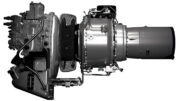
TR40 Metrics: Demand for the TR40 has quadrupled in recent years. More than 1,200 engines have been delivered worldwide, making it Safran Power Units’ best-selling turbojet product. Safran describes the company as the European leader in turbojets for missiles and target drones.
Role: The compact, reliable turbojet, with a high thrust-to-weight ratio, sits at the heart of two major European anti-ship missile programmes: Kongsberg’s NSM and MBDA’s Exocet Block III. Originally developed as the Microturbo TR40, it powered the NSM’s first flight in 2005, before Microturbo became part of Safran, and the Exocet Block III’s first flight in 2006.
2. Kongsberg’s Naval Strike Missile (NSM)
Capabilities & Deployment: Developed by Norway’s Kongsberg Defence & Aerospace, the NSM is a low-altitude anti-ship and land-attack missile designed for high survivability. It can be launched from ships and mobile coastal-defence systems and is deployed by the U.S. Navy on Littoral Combat Ships and Constellation-class frigates, as well as by the U.S. Marine Corps.
U.S. Industrial Partnership: For the U.S. programme, Kongsberg partnered with Raytheon, now RTX, the U.S. prime contractor. Raytheon manufactures NSM launchers, missiles and components in the United States, including final assembly and testing at its Tucson, Arizona facility. Kongsberg remains the NSM’s developer and principal manufacturer. As demand grows, Kongsberg is also establishing a U.S. manufacturing and sustainment facility in Virginia, adding capacity to the American industrial base alongside RTX rather than replacing its role.
Global Adoption: Entering Norwegian service in 2012, Denmark became the 14th country to select the NSM in March 2025, joining Norway, Poland, Malaysia, Germany, the U.S., Romania, Canada, Australia, Spain, the U.K., the Netherlands, Belgium and Latvia. The programme also has an air-launched derivative, the Joint Strike Missile (JSM).
Contracts & Financials: In November 2024, Kongsberg signed its largest missile contract ever with the U.S. Navy, worth NOK 10 billion (approximately US$900 million), with options taking the value to NOK 12 billion (approximately US$1.1 billion). Its Missiles & Aerostructures division’s revenue jumped approximately 63%, from US$570 million in 2023 to US$930 million in 2025, while its order backlog grew approximately 54%, from US$3.7 billion to US$5.7 billion.
Industrial Scale: Kongsberg is expanding production globally through a new factory in Norway, a developing facility in Australia, and its Virginia plant, scheduled to begin manufacturing in late 2027 and reach full-rate production by late 2028.
3. MBDA’s Exocet and the Wider Industrial Boom
Exocet Lineage: Owned by Airbus, BAE Systems and Leonardo, MBDA produces the Exocet family, with ship-, air- and submarine-launched variants. At Euronaval 2024, MBDA marked its 4,000th Exocet produced, making it one of the most extensively produced Western anti-ship missile families.
MM40 Block 3C: The latest generation offers a 250-km-class operational range, a new-generation seeker and improved guidance designed to operate in all weather and withstand electronic warfare and countermeasures.
MBDA Production Surge: Overall missile production doubled between 2023 and the end of 2025, with another 40% increase planned for 2026. MBDA is investing 205 billion in Europe between 2026 and 2030, twice its previous plan, and expects to hire 2,800 people in 2026.