LHR_21-03_Aerospace_600x100
previous arrow
next arrow

Galileo


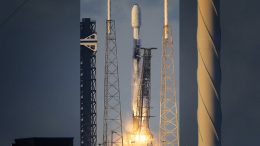
Galileo Launch History

Since 2011, Europe has been building a world-class satellite navigation system, serving billions of users worldwide. Today, the Galileo constellation counts over 30 satellites in orbit, fully occupying all slots…


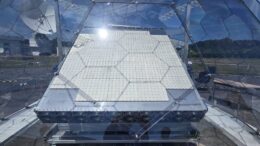
Galileo R&D tests new uplink antenna

Galileo relies on ground-based uplink stations (ULS) to maintain accurate positioning for users worldwide. These stations transmit essential data to the satellites, including the information required to compute the satellites’…


Galileo becomes faster for every user
Galileo becomes faster for every user

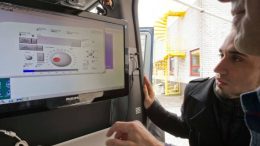
ESA satnav receiver vans – driving between the busy heart of Rotterdam, quiet countryside, and the Agency’s ESTEC technical centre – have confirmed that Galileo signals now provide a first…


How Galileo works

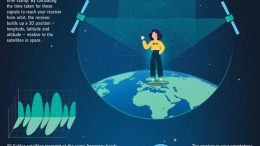
How Galileo works – infographic Your satnav receiver needs a minimum of four satellites visible in the sky to fix its position on Earth’s surface. Each signal incorporates a time…


Galileo help

How does Galileo help other space missions? In 2023 satnav receivers are everywhere: in our phones, our cars, and drones, in fixed infrastructure, aboard boats, trains and aircraft. They are…


Saying goodbye to Galileo 1st Generation

Galileo is Europe’s largest satellite constellation – and the world’s most accurate satnav system. The work on Galileo began two decades ago with two test GIOVE satellites, followed by a…


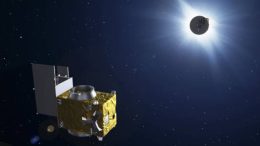
Galileo 2nd generation satellites ready to navigate into the future

Galileo 2nd generation satellites ready to navigate into the future

Airbus satellite design passes important project milestone Preparing for industrialised manufacturing concept@AirbusSpace @ESA_Tech @EU_Commission @EU4Space @defis_eu #Galileo #NextSpace #EUSpace #EUSPA #SatelliteNavigation Friedrichshafen, 08 March 2022 – Airbus has successfully completed…


Subscribe to Our Newsletter

We’ll never send you spam or share your email address.