Icelandair’s Fleet Transformation: From Boeing 757 Heritage to a Mixed Boeing-Airbus A320neo Family Future
AeroMorning – July 30, 2026
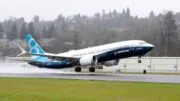
Icelandair is undertaking one of the most significant fleet transformations in its history, shifting from a Boeing 757-centered strategy to a new-generation narrowbody mix combining Boeing 737 MAX with Airbus A320neo Family aircraft.
The airline is redesigning its fleet architecture around mission-focused families:
- Boeing 737 MAX to support European and medium-haul operations;
- Airbus A321LR and A321XLR to progressively replace the Boeing 757 on long-range transatlantic routes;
- additional Airbus A320neo aircraft to provide capacity flexibility.
The transition began with the Airbus A321LR in late 2024 and continues with A321XLR arrivals from 2029. Additional A320neo aircraft are expected from 2028, according to industry sources.
Together, these developments mark a major strategic shift for an airline that long operated an almost exclusively Boeing fleet.
Icelandair orders Airbus A321XLR and begins its Airbus transition
On July 6, 2023, Icelandair placed a firm order for 13 Airbus A321XLR—its first-ever Airbus order—signalling a historic change.
The A321XLR order primarily targets replacement of Icelandair’s Boeing 757 fleet, the backbone of its transatlantic operations.
The aircraft will enable Icelandair to:
- reduce fuel burn;
- lower emissions;
- retain long-range capability with a single-aisle platform;
- increase network flexibility;
- open new market opportunities.
Purchase rights were included, with first A321XLR deliveries scheduled from 2029.
Airbus A321LR: first step into a new era
Before receiving owned A321XLRs, Icelandair accelerated the transition with leased A321LRs.
The first Airbus in Icelandair’s history was delivered in December 2024 (A321LR leased from SMBC Aviation Capital), launching the fleet renewal program.
Four A321LRs were introduced ahead of A321XLR arrivals. The A321LR fits Icelandair’s model by combining:
- transatlantic range;
- lower operating costs;
- improved fuel efficiency;
- capacity comparable to the 757.
Icelandair’s A321LR layout provides about 187 seats: 22 Saga Premium and 165 Economy.
Additional Airbus capacity: six A320neo expected from 2028
Beyond A321LR/XLR, Icelandair is expected to add A320neo aircraft.
Industry sources indicate an agreement with lessor Aircastle for six A320neo, with entry into service planned for summer 2028. No detailed public announcement has confirmed all contractual terms to date; this should be regarded as an industry-reported development.
Expected roles differ from the A321LR/XLR:
Airbus A320neo
- European medium-haul operations;
- seasonal capacity growth;
- routes needing lower capacity than the A321;
- added fleet flexibility.
Airbus A321LR / A321XLR
- transatlantic operations;
- Boeing 757 replacement;
- long-range missions.
The Boeing 757 replacement strategy
The 757 has shaped Icelandair’s identity for over three decades, well suited to its mid-Atlantic position (range, medium capacity, Keflavik performance).
As the global 757 fleet ages, economics have grown more challenging.
A321LR/XLR offer a modern solution:
- lower fuel consumption;
- reduced maintenance requirements;
- lower emissions;
- improved passenger comfort.
The Airbus transition primarily replaces 757s, not the 737 MAX fleet.
The future role of the Boeing 737 MAX
The Boeing 737 MAX remains central to Icelandair. Airbus additions do not imply replacing the MAX.
Current fleet:
- about 21 Boeing 737 MAX 8;
- 7 Boeing 737 MAX 9;
- ~28 MAX aircraft in total.
They mainly serve European and medium-haul markets where capacity and economics fit.
Complementary roles ahead:
Boeing 737 MAX
→ European network and medium-haul operations
Airbus A320neo
→ additional medium-capacity flexibility
Airbus A321LR/A321XLR
→ long-range transatlantic missions and 757 replacement
A mixed narrowbody fleet strategy
Icelandair is moving toward a mixed Boeing–Airbus narrowbody fleet to better match capacity and range to each route.
| Aircraft Type | Role | Status |
|---|---|---|
| Boeing 737 MAX 8/9 | European and medium-haul network | Around 28 aircraft currently operated |
| Airbus A321LR | Transatlantic routes, 757 replacement | In service since 2024 |
| Airbus A320neo | Additional medium-haul flexibility | Six aircraft expected from 2028 (industry sources) |
| Airbus A321XLR | Long-range transatlantic replacement | 13 aircraft ordered, deliveries from 2029 |
Operating two families adds complexity (separate pilot training, maintenance, spares). Post-2030, balancing 737 MAX versus A320neo Family will be a key strategic question.
Icelandair’s strategic model: the Keflavik hub advantage
From its Keflavik hub, Icelandair connects European cities, North American destinations, and Icelandic domestic markets. A321LR/XLR maintain long-range connectivity efficiently; A320neo enables seasonal capacity tuning; the 737 MAX remains efficient on European routes.
Timeline 2024–2030
2024
- First Airbus delivered.
- Icelandair becomes an Airbus operator with the A321LR.
2025–2026
- Expansion of the A321LR fleet.
- Airbus aircraft begin supporting transatlantic operations.
2028
- Six A320neo expected via Aircastle (industry sources).
From 2029
- Start of A321XLR deliveries.
- Progressive replacement of Boeing 757.
A major strategic shift
With A321LR in service, 13 A321XLR on order, and potential added Airbus capacity, Icelandair is building a fleet for efficiency, flexibility, and network optimization—preserving its role as a bridge between Europe and North America.
Source: AeroMorning