AnimaWings Seeks Judicial Reorganisation as A220 Fleet Is Withdrawn
AeroMorning – John Smith – October 1, 2026
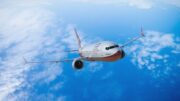
Romanian airline AnimaWings has initiated judicial reorganisation proceedings after withdrawing its entire fleet of six Airbus A220-300s, leaving the carrier with only two Airbus A320s to maintain part of its scheduled and charter operations.
On September 30, 2026, AnimaWings published an official statement announcing that it had initiated judicial reorganisation proceedings to protect business continuity, stabilise operations and restructure its obligations. The company said the decision followed recurring technical problems affecting fleet availability, which subsequently disrupted its operational, commercial and financial activities. These difficulties were compounded by broader economic pressures and rising operating costs.
AnimaWings stressed that it continues to operate. Its flight schedule will be adjusted to available operational capacity, with the company seeking to operate as many scheduled flights as possible and minimise the impact on passengers. Passengers affected by cancellations or changes may receive refunds, rebooking or alternative travel arrangements, depending on the circumstances. Customer-support requests are being prioritised according to travel dates.
1. A Rapidly Expanding Airline
Founded in 2020, AnimaWings was established within Romania’s Memento Group, alongside tour operator Christian Tour. The group is reportedly controlled by the Pandel family, with brothers Cristian and Marius Pandel among its key shareholders. Marius Pandel serves as AnimaWings’ CEO.
Until the summer of 2026, AnimaWings was pursuing an aggressive expansion strategy. By August, its fleet had reached eight Airbus aircraft—six A220-300s and two A320s—and the airline was still targeting a fleet of 14 aircraft by the end of 2027. Its business combined scheduled full-service operations with charter flights for tour operators.
2. The A220 Problem
The six A220-300s were introduced rapidly between December 2024 and July 2026 and had become central to AnimaWings’ expansion. Their withdrawal leaves only the carrier’s two A320-200s available for operations.
AnimaWings has not identified the specific technical problems affecting its A220 fleet. The company said recurring technical challenges had caused repeated periods of aircraft unavailability and that, following an assessment of each aircraft, it decided to progressively suspend A220 operations from September 29, prioritising safety.
All six A220s are powered by Pratt & Whitney PW1500G engines. AnimaWings had previously highlighted the difficulties associated with obtaining spare engines and parts for the type. However, the airline has not attributed its current decision specifically to PW1500G engine problems, so a direct causal link should not be presented as established.
The six aircraft were leased rather than owned by AnimaWings, with aircraft linked to SMBC Aviation Capital, Air Lease Corporation and Azorra. The airline has denied that unpaid lease obligations caused their withdrawal, stating that the decision to suspend their operations was made by AnimaWings itself.
3. Network Hit by the Capacity Shock
Before the withdrawal, AnimaWings’ network combined Romanian domestic links with European scheduled services and a substantial leisure programme. Its announced summer 2026 network included 60 routes to 30 destinations, connecting Bucharest with Cluj-Napoca, Iași, Timișoara and Oradea, as well as destinations including London, Paris, Munich, Milan, Istanbul, Prague, Athens, Stockholm and Geneva. Its charter programme covered 25 holiday destinations in Greece, Italy, Türkiye and Spain.
The loss of six aircraft makes it impossible to operate this network at its planned scale. AnimaWings therefore has to reduce or reschedule services and use its two remaining A320s selectively. The company says passengers will be informed directly and that alternative arrangements will be offered where possible.
4. How AnimaWings Is Trying to Survive
Judicial reorganisation provides AnimaWings with a legal framework for restructuring its financial obligations while continuing to operate, rather than immediately ceasing trading. The airline says its priorities are to stabilise its financial structure, restructure its obligations and find the operational and commercial solutions necessary to continue the business.
Commercially, the immediate strategy is therefore to operate with sharply reduced capacity rather than shut down. AnimaWings is retaining its two A320s, adapting its schedule to available capacity, prioritising passengers with imminent travel dates and offering refunds or alternative travel arrangements when flights cannot be operated.
The airline’s challenge is substantial: it must simultaneously restore operational reliability, preserve enough of its network to retain customers and commercial relationships, and restructure its financial obligations. The withdrawal of six relatively new A220s has transformed what was only months earlier an aggressive fleet-expansion strategy into a restructuring effort focused first on business continuity and financial stabilisation.