





Background & Decision
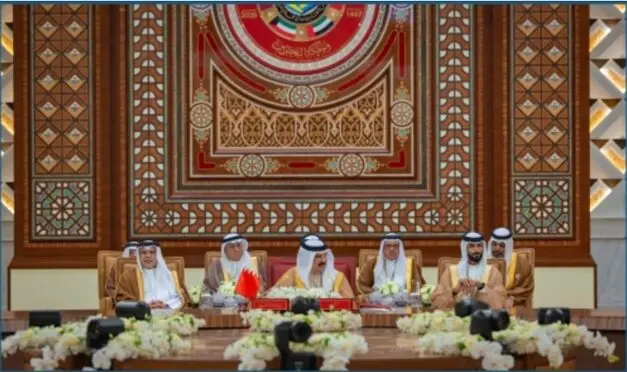
On 3 December 2025, at its 46th summit held in Bahrain, the Gulf Cooperation Council (GCC = 6 members Saudi Arabia, United Arab Emirates (UAE), Kuwait, Qatar, Oman, Bahrain) officially approved the establishment of a unified civil‑aviation regulator for all member states. The new agency — to be called the GCC Civil Aviation Authority — will be headquartered in the United Arab Emirates.
The decision came after prior recommendations by the GCC Executive Committee for Civil Aviation during its 21st meeting in Kuwait City. That meeting had urged the adoption of a unified authority, a common upper‑airspace framework, and coordinated Advanced Air Mobility (AAM) initiatives among member states.
According to the official statement by the civil aviation regulator of one member — the Civil Aviation Authority of Oman (CAA) — the move marks “a strategic step” towards harmonizing regulations, aligning global standards, and strengthening aviation safety, security, sustainability and competitiveness across the Gulf region.
What the New Authority Will Do
The GCC Civil Aviation Authority is expected to perform across a broad remit:
- Harmonize civil‑aviation regulations and policies across all GCC states so that air safety, security, and operational procedures are consistent region‑wide.
- Coordinate the management of a unified upper‑airspace for participating states, facilitating smoother traffic flows, more efficient navigation, and better airspace utilization.
- Serve as a central body for joint infrastructure planning, including airports, air‑navigation systems, and possibly integration with other transport modalities (e.g., rail).
- Lead in training, capacity-building and aligning national aviation authorities’ resources, to develop regional expertise and harmonized workforce standards.
- Represent the GCC as a unified entity in international aviation organisations and forums — improving the region’s global aviation footprint and negotiating power.
In sum, the creation of GCC‑wide regulation and oversight aims to replicate — on a Gulf scale — what bodies like the European Union Aviation Safety Agency (EASA) represent for Europe: a shared regulatory framework, common standards, and coordinated aviation policy.
Reactions & Rationale
The initiative has drawn broad support across member states’ civil‑aviation bodies. The Oman CAA welcomed the approval, calling it “a new phase of joint action” and an embodiment of longstanding Gulf‑wide cooperation.
At the same time, proponents highlight several motivations and expected benefits:
- Given that the Gulf region hosts over 23 international airports and around 17 national airlines — six of which are ranked among the top 50 globally in 2024 — unified regulation is seen as key to managing increasing air traffic, improving safety, and safeguarding service quality across borders.
- Harmonised rules would make it easier to coordinate airspace usage, reduce duplication of oversight, and streamline travel — a major asset for a region with growing regional connectivity ambitions.
- The new agency also lays the ground for future aviation developments in the Gulf: unified airspace management, adoption of advanced air mobility solutions, investments in modern infrastructure, and unified training and safety assessment procedures.
Wider Implications & Strategic Context
The creation of the GCC Civil Aviation Authority marks a shift from a fragmented model — where each Gulf country had its own regulations and civil‑aviation authority — to an integrated, region‑wide framework. The unity aims to mirror supranational approaches seen elsewhere, acknowledging that air travel and airspace management benefit from coordination rather than national‑level fragmentation.
This shift also reflects a broader regional ambition for integration beyond just aviation: during the same summit, the GCC approved other major initiatives such as a railway project connecting the six member states.
From a policy standpoint, the unified authority could improve regulatory clarity for airlines and operators seeking to operate across multiple Gulf states. It could enhance safety and oversight, improve efficiency and cost‑effectiveness, and position the GCC as an integrated aviation bloc — potentially strengthening its competitive edge globally.
On the socioeconomic front, harmonised aviation governance may stimulate investment in airports, navigation infrastructure, and advanced mobility solutions — generating jobs, supporting national airlines, and boosting tourism and commerce.
Finally, by aligning international representation, the GCC Civil Aviation Authority could reinforce the region’s leverage in global aviation forums (e.g. in dealings with the International Civil Aviation Organization (ICAO)), thereby amplifying regional priorities and collective strategy.
Challenges & What’s Ahead
Despite the optimism, several challenges may arise:
- Harmonising regulation across countries with different national laws, economic priorities, and aviation market conditions will require careful negotiation and compromise.
- Implementing a unified upper‑airspace and shared infrastructure demands significant coordination, investment, and harmonisation of technical systems across member states.
- Transitioning national civil aviation authorities to a unified model might face institutional resistance, require retraining of staff, and raise questions about national sovereignty over aviation regulation — especially for states with significant aviation activity or unique national requirements.
- Ensuring equitable representation and benefit-sharing among member states — from major aviation hubs to smaller airports — will be crucial to avoid dominance by larger or richer states.
Looking ahead, much will depend on the new authority’s governance structure, the timeline for regulatory harmonization and infrastructure integration, and the ability of member states to implement changes in a coordinated manner.
Conclusion
The decision by the Gulf Cooperation Council to establish a unified civil‑aviation regulator, the GCC Civil Aviation Authority, represents a milestone in regional aviation cooperation. By centralizing regulation, harmonising safety and operational standards, and coordinating infrastructure and airspace management, Gulf states aim to transform a fragmented aviation landscape into an integrated, efficient regional airspace system.
If successful, this effort could yield major gains — safer and smoother air travel, stronger regional connectivity, economic growth, and enhanced international influence. At the same time, the path ahead will require careful alignment of interests, legal frameworks, and operational practices across diverse national contexts. In a world where regional integration in aviation has proven its value, the Gulf’s leap toward unification could reshuffle the cards — not only for the Gulf states themselves, but for their global standing in civil aviation.
AeroMorning December 5, 2025



Be the first to comment on "A Unified Gulf Cooperation Council (GCC) Civil Aviation Authority: A New Era for Gulf Airspace"