





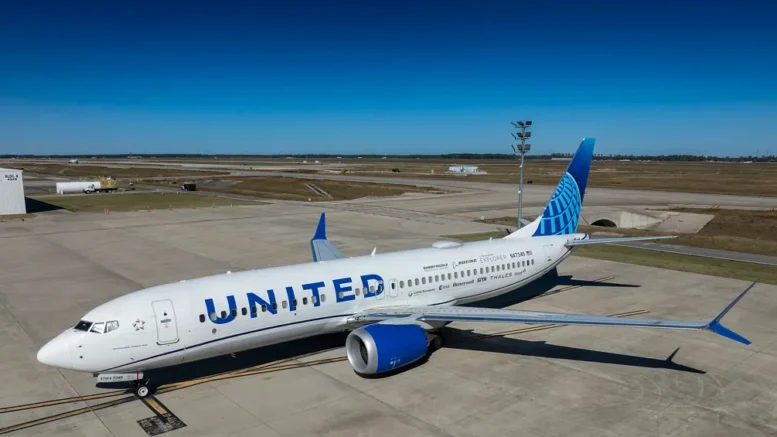
Outside a hangar in Houston, Boeing technical fellow Greg Saccone sat shoulder-to-shoulder inside a United Airlines 737-8 with engineers to test Internet Protocol Suite (IPS) – a future digital communication standard between the flight deck, air traffic control and airline operation centers.
- “Upgrading to a secure, high-performance communications system involves many parts,” Saccone said. “We need everyone to work together on avionics updates, ground routing, security, and system communications. Although this makes flight tests challenging, it’s crucial for minimizing risks in future deployments.”
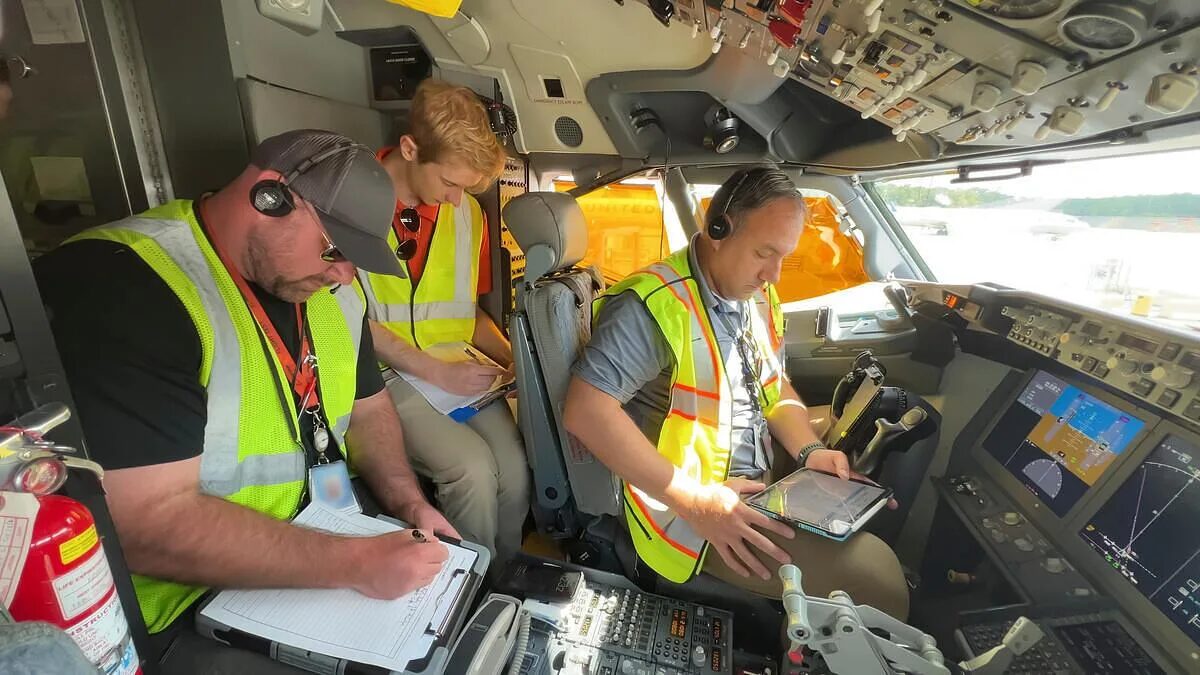
What’s happening: Saccone along with about 70 teammates from Boeing, United Airlines and a range of industry technology and service providers tested advanced digital communications that aim to improve operational efficiency and security.
- Using the 2025 ecoDemonstrator Explorer, a United Airlines 737-8, the initiative focuses on strengthening safety and reducing fuel consumption, costs and emissions.
- Starting in October, the team conducted nine test flights, with U.S. flights from Houston, and concluded with a round-trip to Edinburgh, Scotland.
Why it matters: Internet-based systems will enhance secure communications among the flight deck, air traffic control, and airline operations, leading to improved safety and more efficient flight routes.
- IPS is a future network communication standard that will provide an alternative to two legacy protocols that have been in use for decades and will eventually run out of bandwidth.
- Operational efficiency can reduce fuel use and emissions up to 10%.
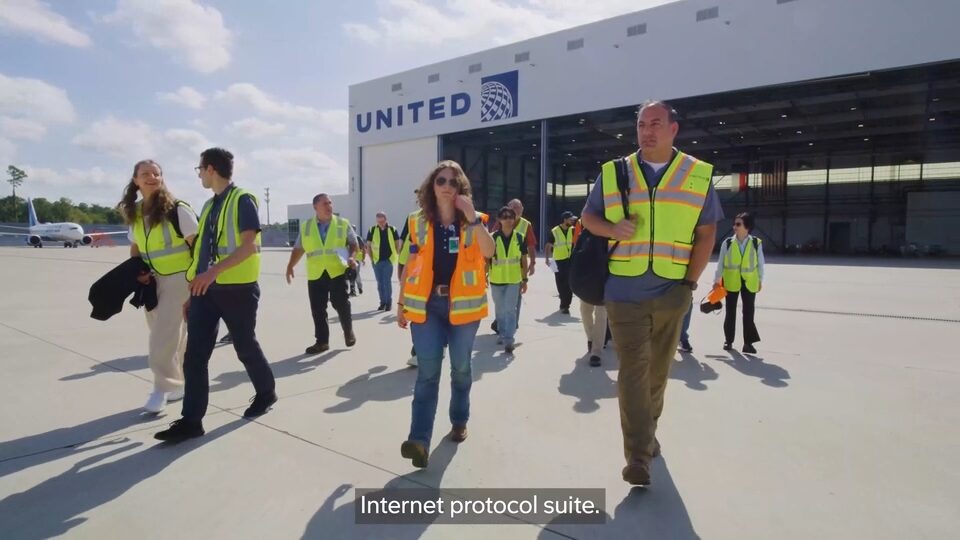
Zoom in: “This is what the ecoDemonstrator program does – we take technologies out of the lab and test them in a live operational environment to accelerate our learnings,” said Justin Ford, ecoDemonstrator program IPS project lead. “We’ve brought together team members from Boeing Technology Innovation, Boeing Test & Evaluation, United Airlines and all our external collaborators to coordinate this testing.”
- Other participants included: Collins Aerospace; Embry-Riddle Aeronautical University; European Space Agency (ESA); Federal Aviation Administration; Honeywell; NASA; SITA; Thales; Viasat.
What they’re saying: “Boeing is proud to lead the advancement of digital communications that significantly enhance safety and operational efficiency in commercial aviation,” said Boeing Chief Technology Officer Todd Citron. “Our collaboration with United Airlines and industry teams is a pivotal step toward improving the reliability and speed of communication between the flight deck and air traffic control to enable safer, more efficient flight for the flying public.”
- “The ecoDemonstrator project is an outstanding collaboration to help support the ongoing upgrades within our air traffic control system and enhance safety for our customers and the global aviation community,” said United 737 Chief Test Pilot Andy McKee. “After many months of careful planning, United is proud to execute this flight test effort with Boeing and our other partners, leveraging the expertise of all our teammates to help shape the future of flight.”
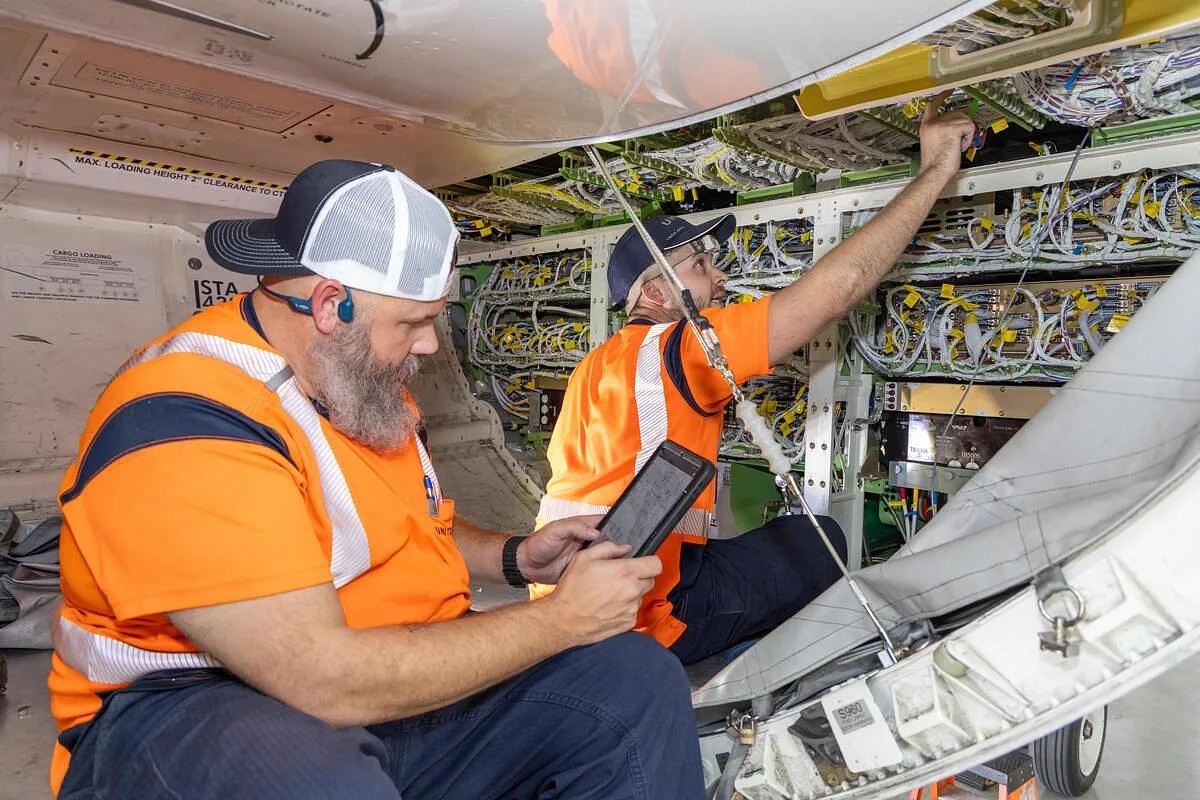
The results: Participants will use the flight test data to enact changes for a technical framework and to evaluate future implementation.
- IPSenables Trajectory Based Operations, which can optimize flows and reduce fuel use and emissions by up to 10%.
- IPSincreases cybersecurity protections for air-to-ground communications and enables advanced features such as multi-link capability.
“Ground implementation of IPS will start in 2029, and on airplanes three years later,” Saccone said. “So, the data we collected will be invaluable to progressing the technology, which is expected to be in operation in 2032.”
Source: Boeing News


Be the first to comment on "Go inside flight deck communications testing"