




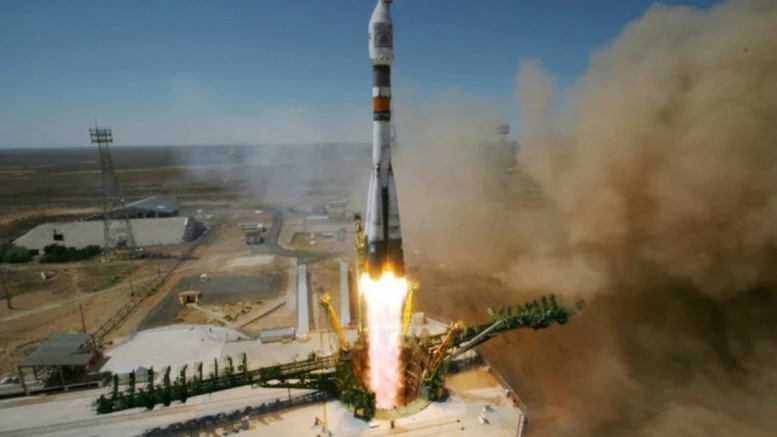
For more than six decades, the Baikonur Cosmodrome has stood as one of the most iconic symbols of human spaceflight. Located on the vast steppes of Kazakhstan, the site has been the launch point for some of the most defining moments in the history of space exploration—beginning with Sputnik in 1957, followed by Yuri Gagarin’s pioneering orbital flight in 1961. Despite geopolitical shifts, technological evolution, and changing international partnerships, Baikonur remains a central pillar of crewed and uncrewed missions to low Earth orbit.
Yet recent events have once again placed the cosmodrome under close scrutiny. After a Soyuz MS-28 mission lifted off on November 27, 2025 successfully toward the International Space Station, Russian space agency Roscosmos confirmed that the only operational crew-rated launch pad at Baikonur—Site 31/6—sustained structural damage during liftoff. While the mission itself proceeded normally, and the spacecraft reached orbit as planned, the post-launch inspection revealed issues with ground infrastructure that could have implications for future operations.
A Launchpad with a Legacy
Baikonur’s launch pads have witnessed more than 1 800 launches since the 1950s. They were engineered during the Soviet era, designed to withstand the harsh environment of the Kazakh desert and the immense mechanical stress of rocket propulsion. But despite their rugged construction, the passage of time, extreme temperatures, and decades of high-frequency launch activity have gradually taken a toll.
Site 31/6, currently the only pad certified for crewed Soyuz launches, plays a critical role in servicing ISS missions. With Russia relying almost exclusively on the Soyuz platform for human space transportation, the integrity of this launch pad is vital. Any structural compromise, no matter how minor, immediately raises questions about reliability, safety, and future planning.
Damage Identified After the Soyuz MS-28 Launch
According to official statements, the damage was identified during standard post-launch assessments carried out shortly after the rocket’s departure. Inspectors noted that part of the service platform and subsurface structures located beneath the pad had been affected. While the exact cause has not yet been disclosed, preliminary evaluations suggest that high-energy exhaust, combined with aging support materials, may have contributed to the degradation.
Roscosmos indicated that spare components were already available and that repairs would begin promptly. The agency also stated that no immediate risk existed to personnel or future missions, though additional inspections and reinforcement measures would be necessary before the next crewed launch.
Implications for Future Missions
The International Space Station remains one of the last significant platforms for scientific research in low Earth orbit. With Russia continuing to operate and launch Soyuz spacecraft, Baikonur’s reliability is essential for maintaining uninterrupted crew rotation schedules.
Damage to launch infrastructure—even if quickly repairable—can introduce uncertainty to mission timelines. A prolonged closure of Site 31/6 would require either accelerating development of an alternative pad or adapting existing facilities not currently certified for human-rated missions. Both options would require significant time and resources.
Beyond the immediate operational concerns, this incident highlights the broader challenges facing aging spaceport infrastructure established during the Cold War. As global demand for space access increases, nations and agencies must consider long-term sustainability, modernization, and diversification of launch capabilities.
Baikonur in a Changing Space Landscape
Despite its age, Baikonur Cosmodrome continues to serve as a highly capable launch facility. It supports not only human spaceflight but also satellite deployments, scientific missions, and technology demonstrations. Its location—ideal for launches into certain orbital inclinations—remains strategically beneficial.
However, the landscape of global launch activity is evolving rapidly. New spaceports in the Middle East, Asia, Europe, and the private sector compete for commercial and scientific missions. The United States and China are expanding multi-pad launch complexes that offer redundancy and flexibility. In this context, incidents like the Soyuz MS-28 launch pad damage underscore the need for continued investment and modernization at Baikonur.
Looking Ahead
While the recent damage at Site 31/6 represents a technical setback, it also offers an opportunity to re-evaluate and strengthen the infrastructure that supports Russia’s human spaceflight program. Ensuring long-term safety and sustainability will require coordinated engineering, transparent communication, and decisive planning.
Baikonur remains a cornerstone of global spaceflight heritage. Its future will depend on how successfully it adapts to the demands of 21st-century space operations—balancing legacy systems with the need for modernization, reliability, and resilience. The world will watch closely as repairs proceed and as Roscosmos prepares for the next chapter in the Soyuz program.
AeroMorning December 4, 2025



Be the first to comment on "Baikonur Cosmodrome: A Historic Gateway to Space Faces New Challenges After Soyuz Launch Pad Damage"