




India aviation authorities confirm persistent navigation interference since 2023.
In late 2025, India’s Ministry of Civil Aviation officially confirmed a series of “regular” GPS jamming and spoofing incidents affecting several of the country’s busiest airports. Civil Aviation Minister presented the information in a written response to Parliament, confirming what aviation analysts had warned for months: satellite-based navigation in India is under repeated electronic interference.
The issue, ongoing since 2023, poses a serious risk to aircraft relying on GPS for navigation, particularly during approaches and landings where precision is critical.
Airports Affected
The Ministry reported GPS disruption at eight major airports:
- Delhi – Indira Gandhi International Airport (IGIA)
- Mumbai – Chhatrapati Shivaji Maharaj International Airport
- Bengaluru – Kempegowda International Airport
- Hyderabad – Rajiv Gandhi International Airport
- Chennai International Airport
- Kolkata – Netaji Subhas Chandra Bose International Airport
- Amritsar – Sri Guru Ram Dass Jee International Airport
- One additional secondary airport (not publicly named)
Delhi has been particularly affected, with more than 100 incidents over a two-month period disrupting satellite-based approach procedures. Pilots often had to switch to conventional navigation aids, increasing workload and operational complexity.
Understanding Jamming and Spoofing
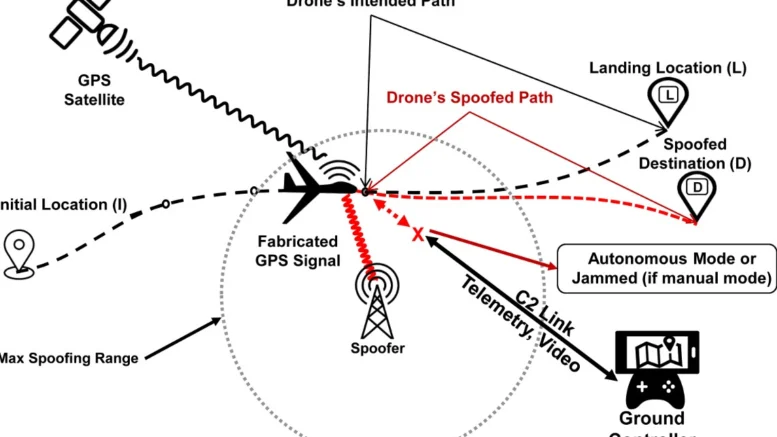
GPS Jamming occurs when signals are blocked by stronger radio emissions, causing loss of satellite navigation.
GPS Spoofing involves transmitting false signals that mislead aircraft systems into calculating incorrect positions. Spoofing is particularly dangerous because it can:
- mislead autopilot systems
- distort situational awareness
- force unnecessary go-arounds
- increase pilot workload at critical stages
Indian incidents reportedly involve both jamming and spoofing, highlighting sophisticated electronic threats.
Government Response
The Ministry of Civil Aviation has mobilized several agencies, including the Wireless Monitoring Organisation (WMO), responsible for locating unauthorized transmissions. The Department of Telecommunications and Ministry of Home Affairs are also involved, reflecting national security concerns.
Measures already in place include:
- continuous radio-spectrum monitoring
- enhanced air-traffic control protocols
- advisories to airlines
- pilot training for GPS-denied scenarios
- deployment of equipment capable of detecting spoofing attacks
So far, no source has been publicly identified. The government continues to investigate whether these incidents are accidental or deliberate.
Operational and Safety Implications
Although no accidents have occurred, the repeated interference poses risks:
- Disrupted Landing Approaches:
Aircraft using RNAV (GNSS) or RNP procedures must revert to traditional navigation aids during GPS loss, increasing workload and causing potential delays. - Airspace Management:
GPS loss affects en-route navigation, terrain awareness, and ADS-B surveillance. ATC must increase separation, reducing airport capacity. - Cross-Border Implications:
While similar interference has occurred in other regions, India’s situation is localized and sustained, making detection and mitigation urgent.
Airlines and Pilot Response
Indian airlines have issued internal bulletins to prepare crews for GPS disruptions. Pilot unions advocate for:
- multi-sensor navigation systems
- reinforced ground-based navigation aids
- real-time spoofing detection tools
- improved regulatory communication
International aviation organizations are monitoring the situation, given the presence of foreign carriers at affected hubs.
Why Airports Are Vulnerable
Airports are particularly susceptible because:
- aircraft follow predictable paths
- approaches occur at low altitude, limiting signal options
- pilot workload is high during landing
- navigation depends on precise timing
Even short outages can create operational challenges, especially under poor weather or heavy traffic.
Mitigation and Future Measures
Authorities are exploring measures to enhance resilience:
- Upgrading Ground Navigation: Reinforcing ILS, VOR, and DME aids
- Anti-Spoofing Technology: Integrating multi-constellation and inertial systems
- Enhanced Radio Monitoring: Deploying direction-finding sensors around airports
- International Collaboration: Working with ICAO and civil aviation authorities to develop reporting and mitigation frameworks
These steps aim to maintain safety, reduce operational disruption, and prevent potential accidents.
Global Implications
India’s disclosure underscores a global reality: GPS, while transformative, remains vulnerable. Aviation authorities worldwide are paying attention, as similar threats could affect any densely trafficked airspace.
The repeated interference highlights the need for:
- robust backup navigation systems
- coordinated regulatory action
- pilot preparedness for GPS-denied operations
- advanced detection and mitigation technologies
The aviation community watches closely as India works to identify sources and implement long-term safeguards. With major hubs such as Delhi, Mumbai, and Bengaluru affected, resolving the issue is a matter of both national and regional aviation safety.
AeroMorning December 4, 2025



Be the first to comment on "Growing Concerns Over GPS Jamming and Spoofing at Major Indian Airports"