




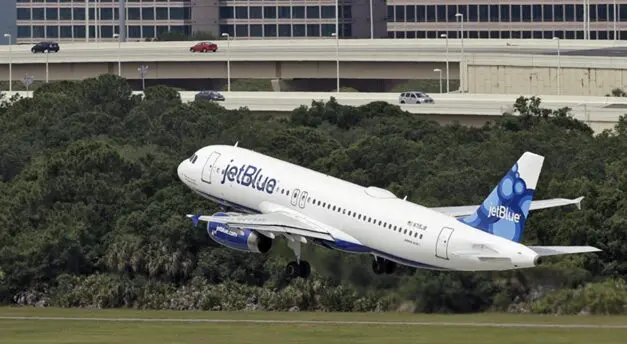
1. Fleet Grounding: November 2025
- On 29 November 2025, approximately 6,000 Airbus A320-family aircraft were grounded worldwide following an Airworthiness Directive (AD) issued the day before on 28 November 2025.
- Triggered by a flight-control anomaly on a JetBlue A320, causing sudden altitude changes and injuries to passengers.
- Of these 6,000 aircraft:
- 4,000 have already received software retrofits, enabling a rapid return to service
- 100 aircraft require hardware replacement, a longer and more complex process
- This grounding represents one of the largest precautionary fleet actions in commercial aviation history with severe impact in the US due to Thanksgiving
2. JetBlue / Airbus A320 Incident
- Date: 30 October 2025
- Event: Sudden flight-control failure, abrupt altitude drop, passenger injuries, safe diversion.
- Cause: Elevator and Aileron Computer (ELAC) anomaly.
- Probable Mechanism: Single-Event Upset (SEU) — radiation-induced bit-flip in avionics electronics caused by intense solar radiation.
- Mitigation: Software updates for most aircraft; hardware replacement required for a small subset;
3. QF72 Incident (2008
- Flight: Qantas Flight 72 (A330‑303) – 7 October 2008
- Event: Two uncommanded pitch-down maneuvers.
- Probable Cause: Likely triggered by a Single-Event Upset (SEU) affecting the ADIRU, feeding erroneous data to flight-control computers.
- Impact: Multiple passengers and crew injured.
- Lesson: Reinforces the importance of redundancy, hardware/software reliability, and pilot preparedness, as well as mitigation of rare environmental events like SEU.
4. SEU and Certification Standards
- Single-Event Upset (SEU) occurs when cosmic or solar radiation alters the state of microelectronic devices at high altitudes. Flight-critical systems like Flight Controls (equipment ELAC, ADIRU, FMGC, FCPC) are particularly sensitive.
- Relevant Certification Standards:
- CS‑25.1309 (EASA) / FAR 25.1309 (FAA):
- Identify single, multiple, and environmental failures
- Assess consequences from minor to catastrophic
- Design, mitigation, and exhaustive testing to ensure hazardous failures, including SEU, are extremely improbable or impossible
- DO‑178C / ED-12C: Governs software development, ensuring traceability, verification, and validation of all critical software paths
- CS‑25.1309 (EASA) / FAR 25.1309 (FAA):
- Key Point: Strict compliance with CS‑25.1309 / FAR 25.1309 and DO‑178C ensures protection against SEU and other rare environmental hazards, maintaining flight-critical system safety.
5. Parallel Lessons from QF72 and JetBlue
- Both incidents involved flight-control computers likely affected by SEU, highlighting environmental hazards as a real risk.
- Redundancy is necessary but not infallible – additional protections beyond redundancy must include enhanced filtering, reinforced plausibility thresholds, software safeguards against spike values, and stricter cross-check rules
- Business pressures vs safety margins – high production/delivery targets can reduce time for exhaustive testing of rare hazards.
- Certification rules for extreme conditions – rigorous application of CS‑25.1309 / FAR 25.1309 remains essential.
6. Implications and Recommendations
- Integrate SEU/SEE mitigation in system design: Redundancy, ECC (Error Correcting Code) memory, robust hardware/software architecture.
- Verify against CS‑25.1309 / FAR 25.1309: Test for single/multiple failures, environmental hazards, worst-case scenarios.
- Fleet oversight and retrofitting: Software/hardware updates to maintain global safety margins.
- Safety culture: Prioritize rigorous engineering and risk management over financial and operational pressures.
7. Conclusion
- Grounding of 6,000 A320s highlights systemic vulnerability in modern aviation.
- SEU is a credible cause for both JetBlue and QF72 incidents, showing that rare environmental hazards must be mitigated proactively.
- Strict compliance with CS‑25.1309 / FAR 25.1309 and DO‑178C, including exhaustive testing and mitigation, provides robust protection against SEU.
- Rigorous application of certification standards ensures that complex automation and rare environmental events do not compromise flight safety.
AeroMorning November 29, 2025
Guest Post Mr John Smith Disclaimer : The views expressed are those of the author and do not necessarily reflect AeroMorning’s official position



Be the first to comment on "A320 Immediate Grounding: November 2025 — QF72 and JetBlue, Two Cases Highlighting Systemic Risks"